Category: mental-health

  • I Can’t Remember Anything….or Can I?

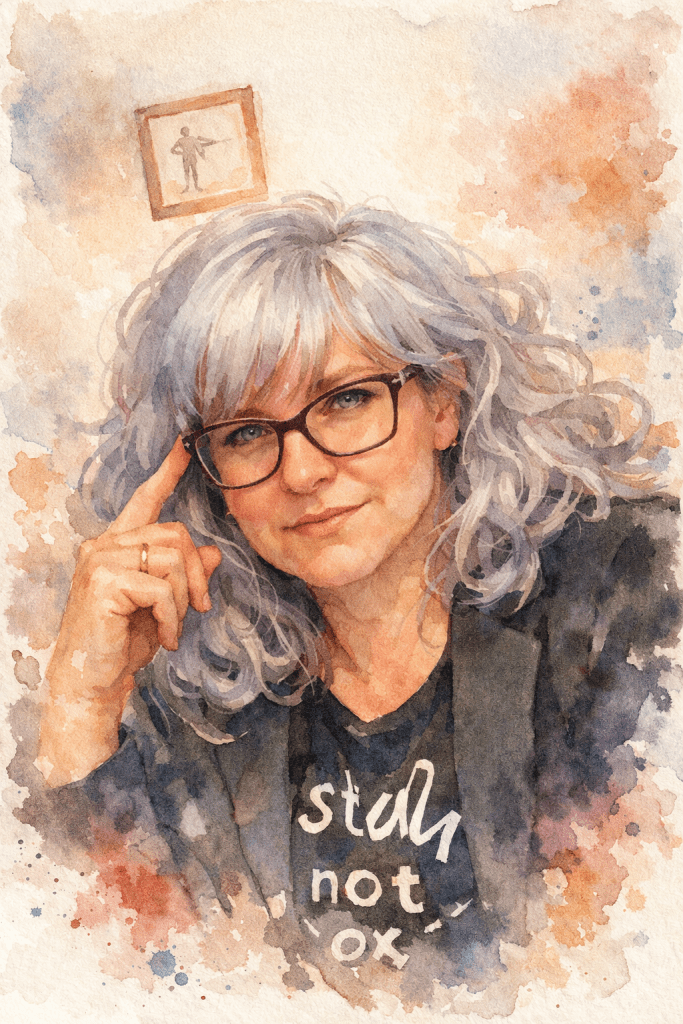
    Is she thinking? Is she plotting? Does she know anything?

    I can tell you two things.

    I know what I know. I also know what I don’t know.

    Still, there are moments when answers don’t come as quickly as they used to, and those moments shake my confidence. In a world where information is a thumb‑tap away, we expect instant answers. That expectation makes uncertainty feel like failure.

    When I first started working, you wrote letters and waited a week or two for a reply. You picked up a desk phone and called someone to resolve an issue. There was time built into the process — time to think, to gather facts, to let an answer settle. It’s no wonder anxiety has risen. We are not given time to work through problems before we respond. We have been conditioned to be “on” all the time.

    For years the grind was worn like a badge. I have been through a lot and worked on very difficult projects. I have learned — finally, I hope — that working without living is harmful. Being constantly “on” is what makes me stumble: anxiety rises, my thoughts tangle, and I don’t give myself the space to really consider what I’m being asked.

    Now that I am seasoned (read: over 50, lol), there are times when my train of thought simply disappears. It’s gone, and panic follows. I worry they will think I’m not knowledgeable, that they will doubt my expertise.

    Then the voice in my head: AM I LOSING MY MIND? (Reader, she was not losing her mind.)

    The key for me is to pause. Pausing lets the crossed wires uncross themselves. It reminds me that I do know things, and that clarity often comes after rest. To be responsive and helpful I need recovery time.

    Boundaries about when I am available are now at the top of my list. I carve out the first part of my morning to review new emails and requests from the day before. That quiet window helps me prioritize what needs attention and what can wait. I have also blocked out my lunch hour. It’s making a big difference: I’m not fighting to stay awake at 3 p.m., and I’m more able to listen — really listen — instead of rushing to respond.

    Slowing down doesn’t mean falling behind. It means giving myself the time to think, recover, and show up with the clarity my work deserves.

  • Books….Learning….and How I get Through Brain Freeze

    Reading….

    It has been part of my life for as long as I can remember.

    In elementary school, when a new reader arrived at the start of the year, I would hide it in my room and read long after lights-out. In sixth grade, summer meant trips to the base library every other day, returning with six or seven small novellas and devouring them all.


    When my daughter was born, I began buying books for her and raising her to love the library and choose her own stories. I’ve always been a tactile reader who loved the feel and smell of a new book. The Kindle changed that habit by letting me carry a whole shelf in one device, and I eagerly gobbled up everything I could.


    Coursework, however, felt different. It lacked the plot and escape of fiction and required a different kind of attention. Learning—especially subjects I’d struggled with as a child, like math—became a deliberate journey. In IT, reading is unavoidable; the field is intricate and data-driven, and while some concepts came naturally, others required steady, piece-by-piece effort.

    Earning my ACEDS certification meant practicing daily and taking the material in manageable chunks. My Legal Project Management course was fascinating and at times intense.


    I usually learn best by writing.

    Sometimes that means handwriting notes; other times it’s dumping my thoughts into a Word document until the ideas settle.

    This will often get me through the brain freeze, unless the freeze is caused by Carl the Saboteur telling me I am NOT smart enough to be reading *insert smart material here*.

    Carl is an ass, but most times he is there for a reason, even though there are times I do not know what the reason is.

    It’s in those moments that I need to sit with someone who I can legit word vomit to and work through that doubt with.

    Then there are times where I just have to stop, and it becomes a “tomorrow problem”.

    I mean, your brain needs a break too.

    If you wouldn’t mind, I would love to hear your tricks and tips for getting through the brain freeze when reading/studying, so please share in the comments and we can all make our own cheat sheets.

    Until next week…

  • My Brain, Featuring Depression and Anxiety: Overthinking, a Look Into Why I Think The Way I Do

    My Bitmoji: She’s not impressed

    The one thing that has always thrown me into full throttle overthinking is when I was starting a new journey.

    No matter what it was: a course, a position, a life event, I would overthink that thing into OBLIVION. If someone said “Have you thought about….” And I would stop them right there. I would ask the question: “You mean *insert thing here*?”

    If I do not overthink it at the beginning, it is coming. Could be in the middle, or my favourite, AT THE END.

    Once something is over, look out. I will chew on that until it bleeds.

    While you may be thinking most of this is great, because I have considered every angle (I mean sure, I most likely have), I am going to tell you a secret…

    This is what holds me back. It will stop me from moving forward because I will hyper focus on the things that could possibly go wrong.

    See what happens here? It’s a vicious cycle.

    When I overcome a hurdle, it seems like I end up choosing a different, very curvy road. A road I know has been well travelled. A road that I now need to look at through a very uber science-y telescope.

    Sometimes I will write things down and read them over to see if I am going down an unnecessary path to insanity.

    Other times I will write to someone I trust, and genuinely ask them if I am crazy (they usually say no…except the smartass ones, they pile onto why I am crazy and then we laugh and I feel better).

    There is the three deep breaths rule I have been following. If I find my heart start to race and my attention all over in different directions, I stop and take three deep breaths.

    It restarts my thought process.

    Getting up and “doing some laps” around the office helps, especially if it leads to someone you can word vomit with.

    Finding that confidence, that nugget of “frig yeah I know this” is not always easy.

    I will often remind myself that if I didn’t know what I was doing, I would be unemployed, and the fact that I HAVE been employed since my teenage years (minus childbirth and my mental breakdown) really speaks for itself.

    So, if you have been in the bucket of self doubt, you’re not alone. Look around you, the bucket is definitely not empty.

  • Anxiety Wins Again (Yay?)

    Here I am, writing at 11:56pm on a Monday evening.

    If you’re like…”Hey, this looks different”, you’d be right. My brain decided that I didn’t like how busy this blog looked, so a total revamp happened.

    It is nights like these, the ones where my brain is in overdrive, that I wish would stop.

    In the few minutes it has taken me to write this post, I have overthought every previous post I have written so far. Because…REASONS (not sure what yet, but my brain WILL come up with some, of that I can be certain).

    Thankfully, my fiance is still downstairs. He has no idea what I have been up to (yet).

    I have the heebie jeebies. I cannot sit still and I want to crawl out of my own skin.

    It is like a hamster’s horror movie, where they are on the running wheel and they keep running faster and faster…but can’t get off, and they know they will probably die here.

    My favourite piece of advise during these times is: “relax”.

    Late Breaking News: I CAN’T.

    I am stuck in flight or fight – with no way out.

    I will eventually go back downstairs, and my fiance will make me a cup of tea and we will talk about why my brain is on fire.

    It’s suffocating, and frustrating. I just wanted to come up to bed and go to sleep. I mean, I am yawning as I sit here.

    There has been too much going on…everything all at once and I can’t seem to totally shut things off.

    It is like my body feels guilty for attempting to relax.

    I have been in freeze for so long. Is this the release? And my whole psyche can’t handle it?

    Whatever it is, I need to go downstairs and unload.

    So…

    Good Morning, it is now Tuesday.

  • Huh? They Said What?

    The gut reaction to say what you really want is something you learn to subdue over time.

    After years of managing people and processes, I’ve learned that pausing before I speak is essential. When challenged, the first instinct is to defend — it’s human nature. Reacting without hesitation rarely produced the results I needed. I used to feel I had to respond immediately to questions, emails, and phone calls.

    A career coach taught me I don’t have to answer in the moment. Pausing resets your brain and lets you process what’s being asked or receive feedback constructively. You won’t always get feedback delivered kindly. That’s when the pause matters most. You may be catching someone in their worst moment; it’s not always about you, and it’s not the time for a snarky comeback.

    Living with a mental illness makes this especially hard. I tend to take things personally. Through coaching and therapy I’ve learned compassion — for myself and for others.

    Staying calm in stressful moments is difficult, especially when the work being criticized is something you’ve poured yourself into. It’s your baby, your work in progress, and you’ve worked hard on it. I now try to parse feedback and see it from the other person’s perspective. What am I missing? What could be done differently or more efficiently?

    What I’ve learned is this: don’t try to be the smartest person in the room. Collaboration and growth depends on it. I’m always learning and expanding my skills; teaching others comes next. Surrounding yourself with people who challenge you is top tier.

    So the next time you feel under attack and want to say, “What the fuck were you thinking?” — pause.

    Breathe.

    Ask questions.

    Dig a bit deeper.

    It’s not you. It’s the moment.

  • What You Don’t See

    Having a mental illness is a daily struggle.

    Some days are easier than others, but sometimes the smallest of tasks requires a herculean effort: getting out of bed, showering, brushing my teeth, and even deciding what to wear.

    My brain fights against logic and reason.

    For example: my first thought and/or reaction to any conflict or constructive criticism is THE BIG BAD.

    They hate me. I am stupid. I can’t do this job. Will I ever get ANYTHING right?

    Would you know this by looking at me? Absolutely not.

    I’m “happy”, “energetic”, “outgoing”.

    I’m good at masking, and I have been since childhood. A “high functioning depression” human.

    Could I unmask? Sure.

    It did happen, not by my own choice, when I had my mental breakdown in 2011.

    My body took over. I hurt, physically. I slowly slipped into a broken mess. My compartmentalism blew back in my face.

    No longer could I say that I was “fine”.

    I have been extremely lucky to have had my family doctor since my early 20s. She delivered my daughter, and was there as I went through my tumultuous separation.

    The day I made the appointment was not an easy one. What was I going to say?

    Turns out I didn’t have to say anything. When she asked me what brought me in, I fell apart. She grabbed a box of Kleenex, pulled her chair up to mine.

    She looked at me and said “You’re done pushing through”.

    I was put off, and seen weekly.

    My daughter was in junior high. I told her the doctor said I needed time off “to rest”.

    I got up every morning and when she left to walk to school, I got back into bed.

    I didn’t want to see anyone. I didn’t want to talk to anyone. I was angry, frustrated, and was short with those who reached out to me.

    You see, depression isn’t necessarily “sadness”. It’s an overload of powerlessness, fear, anger, exasperation, anguish (add your experience here).

    It took me weeks to be able to function. Weeks for the medicine to begin to correct the chemical imbalance.

    The amount of times I heard how “physical activity” would “cure” my depression was unreal, because here’s the thing, I was in the best physical shape of my life when this illness brought me to my knees. I ran my first 10k weeks before my breakdown.

    Mental illness is not just mental. As I have said, it affects you physically. You seize up, you hurt, and it takes time to regain the energy level you had previously been used to.

    With medication and support, I was able to go back to work.

    I have trialed coming off my medication a couple of times, which did not end well.

    For a time, I was on low dose antipsychotics to help with my anxiety (I was chewing the skin around my fingernails).

    I have been on Ativan.

    I am currently on a different antidepressant than the one I was prescribed all those years ago. It has kept me stable.

    What has also helped is the support I have at home, and those of my colleagues.

    I have been transparent about my illness. I know that there are others who cannot be, for reasons that are their own.

    I guess want people to know that there are those of us out there who struggle daily, even though is not outwardly apparent.

    We are overachievers.

    We are people pleasers.

    We find it hard to ask for help.

    If you do catch us unmasked, sit with us. We may not need conversation.

    Sometimes, just knowing that someone is THERE makes a difference.

    I often wonder if I had had someone say “Hey, I’ve noticed that you haven’t been yourself lately. Is there anything I can do to help? Anything you wanted to share?” how I would have responded.

    It’s easy for me to respond “Fine”, “Great”, “Okay” to a general “How are you doing?”

    It is harder for me skirt around a more direct question. And, this may not work for everyone. You may get a “No, all is good”. The thing is that the effort may be noticed. It may shift a mindset.

    I am hope that by sharing a small bit of my experience, that we can all take a moment to “see” people in those vulnerable moments.

    To notice that person sitting alone.

    To notice the misplaced anger.

    To reach out.

    When mental illness shows up at work, at home, people often retreat into silence – both the person struggling and the people around them. Being noticed matters. A small gesture of care, a quiet check in, a moment of presence can make someone feel less invisible.

    Human connection doesn’t solve the struggle, but it often softens the edges.