Category: Leadership

  • I Can’t Remember Anything….or Can I?

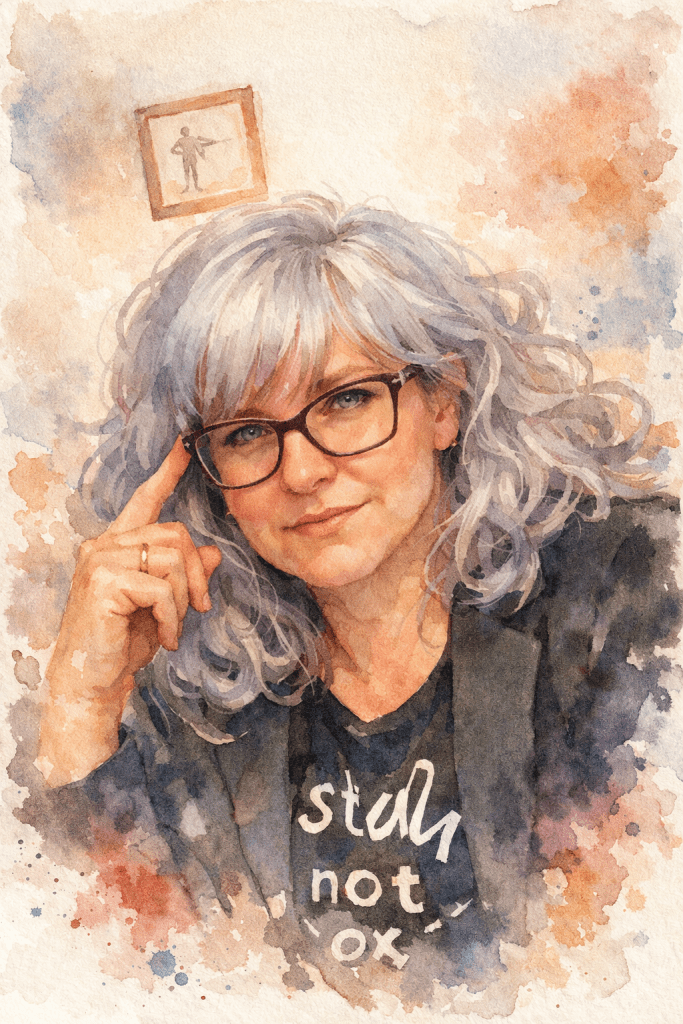
    Is she thinking? Is she plotting? Does she know anything?

    I can tell you two things.

    I know what I know. I also know what I don’t know.

    Still, there are moments when answers don’t come as quickly as they used to, and those moments shake my confidence. In a world where information is a thumb‑tap away, we expect instant answers. That expectation makes uncertainty feel like failure.

    When I first started working, you wrote letters and waited a week or two for a reply. You picked up a desk phone and called someone to resolve an issue. There was time built into the process — time to think, to gather facts, to let an answer settle. It’s no wonder anxiety has risen. We are not given time to work through problems before we respond. We have been conditioned to be “on” all the time.

    For years the grind was worn like a badge. I have been through a lot and worked on very difficult projects. I have learned — finally, I hope — that working without living is harmful. Being constantly “on” is what makes me stumble: anxiety rises, my thoughts tangle, and I don’t give myself the space to really consider what I’m being asked.

    Now that I am seasoned (read: over 50, lol), there are times when my train of thought simply disappears. It’s gone, and panic follows. I worry they will think I’m not knowledgeable, that they will doubt my expertise.

    Then the voice in my head: AM I LOSING MY MIND? (Reader, she was not losing her mind.)

    The key for me is to pause. Pausing lets the crossed wires uncross themselves. It reminds me that I do know things, and that clarity often comes after rest. To be responsive and helpful I need recovery time.

    Boundaries about when I am available are now at the top of my list. I carve out the first part of my morning to review new emails and requests from the day before. That quiet window helps me prioritize what needs attention and what can wait. I have also blocked out my lunch hour. It’s making a big difference: I’m not fighting to stay awake at 3 p.m., and I’m more able to listen — really listen — instead of rushing to respond.

    Slowing down doesn’t mean falling behind. It means giving myself the time to think, recover, and show up with the clarity my work deserves.

  • Change

    Change. That’s a word that can cause nausea.

    And whether it is professional or personal, change is a big deal.

    How you communicate that change is even more important — and it depends on the circumstances and the people involved.

    I grew up as a military brat. Change happened every 3-4 years, and it was out of my control. The older I got, the more I despised that part of my life. We would JUST get settled, and into a groove…then the posting message would arrive.

    Now that I look back, being in a military family prepared me for change, in all facets of my life. Do I like change? Not always, even when I know it is necessary. Change means you are deviating from your well-established groove. Even when the change is a good one — better efficiencies at work, a new and exciting career move, or a fresh start in a new city — you’re still out of your comfort zone.

    If you know a change is coming and you have some leeway, it’s always best to bring in the people it will affect as early as you can. When people KNOW what’s happening and have space to ask questions and process it, it makes the whole experience feel a little less overwhelming — and buy‑in becomes so much easier.

    When people are included in a change, they feel like they’re part of something — and that sense of belonging matters.

    I know that sometimes change happens without any notice, and sometimes it’s completely beyond YOUR control. You’re left dealing with the fallout. Change under pressure tests you, pokes at you, and it can really sting. In those moments, being as transparent as you can about what you know — and acknowledging that the situation isn’t ideal — helps. Working together as a team to move forward can make that kind of change feel a little less heavy.

    I’m about to start a new position on Monday, and while I’ve had time to decompress and recharge (thank you, Oceanstone — that’s the picture above), I know that tomorrow evening I’ll still get a little bit of that ‘but what if?’ feeling.

    I’m lucky to have had amazing support from my new workplace, and I already know a few folks there, so it won’t feel as completely ‘brand new’ as some of my previous moves.

    I believe my childhood gave me the power to adapt (along with some unresolved trauma — yay). That ability has helped me read a room, sit back, and learn. Observation is a great tool — we just don’t always get the chance to use it.

    Lessons learned — especially if you can actually have a debrief — can help a lot. Knowing what went wrong AND what went right gives you such an advantage going into the next project.

    For personal change — journal. I started doing this as part of my therapy homework at the end of last year, and it’s been incredibly helpful. Going back and reading through some of the tough moments has shown me what helped and what didn’t.

    When you’re open, honest, and transparent — and you give people the chance to ask questions and be involved — it doesn’t just make change easier. It reminds everyone that they’re capable of moving through it.

  • What Public Speaking Taught Me About Hard Conversations

    Public speaking has never been my strong suit. I still remember the quarterly presentations in junior high French class — the anxiety started the night before and didn’t let up while I was up there. I was so tense I couldn’t even tell you afterward what I’d said.

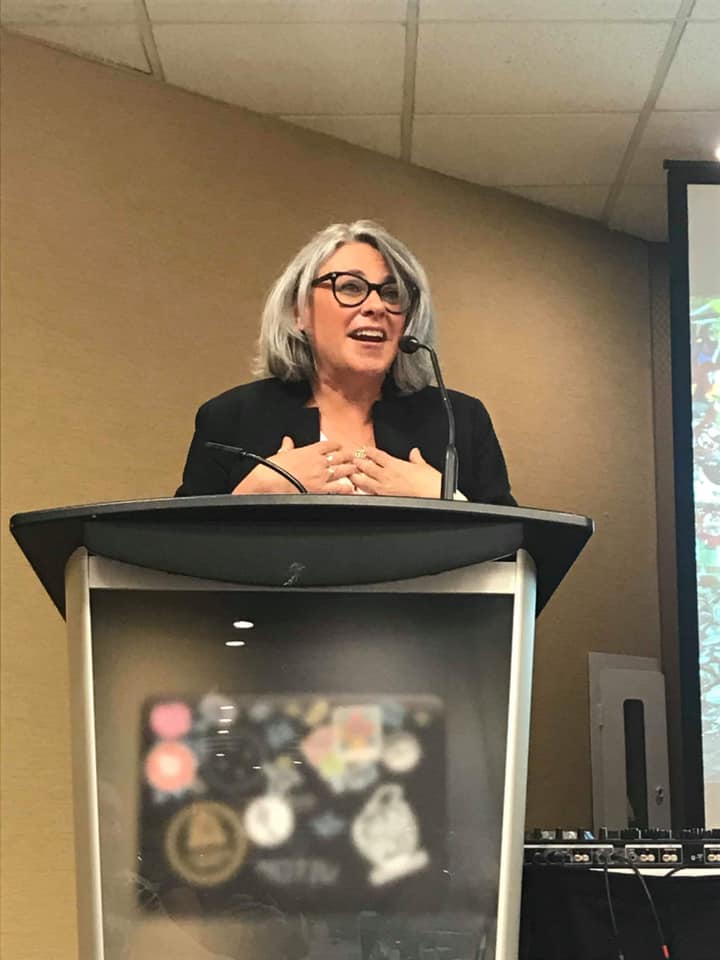
    That fear followed me into adulthood. I still get anxious as hell before any talk. And yet, over the years I’ve done two speaking engagements on mental health at conferences here in Halifax. I thought I’d fumbled both times, but people told me otherwise. Hearing that I’d actually connected with the audience made me feel less like a hot mess and more like someone who could get a point across.

    Getting older didn’t magically make it easier. What didn’t change was how hard it was to have difficult one‑on‑one conversations. My default was to deflect, which is not great when you’re in a leadership role. I’d freeze, avoid the hard lines, and hope the problem would sort itself out.

    The hardest day of my career came when I had to have several very difficult conversations. I tossed and turned the night before, running through every possible scenario. Then a thought hit me: prepare for the conversation like it’s a speech. Line up your points, speak with clarity, and imagine you’re addressing more than one person.

    Framing those talks as a speaking engagement changed everything. Instead of talking at someone, I showed up ready to deliver a clear message and then sit and listen. I kept my composure, took in what was said, and stayed present. Afterwards I was able to debrief with upper management and move forward.

    If you struggle with both public speaking and hard conversations, try this: prepare your points as if you’re stepping up to a podium. It doesn’t make the conversation fun, but it gives you structure, confidence, and the space to actually hear the other person.

  • Huh? They Said What?

    The gut reaction to say what you really want is something you learn to subdue over time.

    After years of managing people and processes, I’ve learned that pausing before I speak is essential. When challenged, the first instinct is to defend — it’s human nature. Reacting without hesitation rarely produced the results I needed. I used to feel I had to respond immediately to questions, emails, and phone calls.

    A career coach taught me I don’t have to answer in the moment. Pausing resets your brain and lets you process what’s being asked or receive feedback constructively. You won’t always get feedback delivered kindly. That’s when the pause matters most. You may be catching someone in their worst moment; it’s not always about you, and it’s not the time for a snarky comeback.

    Living with a mental illness makes this especially hard. I tend to take things personally. Through coaching and therapy I’ve learned compassion — for myself and for others.

    Staying calm in stressful moments is difficult, especially when the work being criticized is something you’ve poured yourself into. It’s your baby, your work in progress, and you’ve worked hard on it. I now try to parse feedback and see it from the other person’s perspective. What am I missing? What could be done differently or more efficiently?

    What I’ve learned is this: don’t try to be the smartest person in the room. Collaboration and growth depends on it. I’m always learning and expanding my skills; teaching others comes next. Surrounding yourself with people who challenge you is top tier.

    So the next time you feel under attack and want to say, “What the fuck were you thinking?” — pause.

    Breathe.

    Ask questions.

    Dig a bit deeper.

    It’s not you. It’s the moment.

  • How Did I Get Here?

    I ask myself this often. Sometimes because I doubt my abilities. Other times because I’m frustrated.

    Imposter Syndrome is a beast.

    Everyone has experienced it.

    I do wonder sometimes – does my depression and anxiety amplify it? I ask that because it is all consuming when it does ramp up.

    The times I do not doubt myself, the times I do forge ahead with a decision, I feel great…for a while.

    Then it starts: do I really know what I am talking about? Who do I think I am?

    Well….

    I’m educated and experienced in both of my fields: Paralegal and Information Technology.

    Why does my brain attempt to tell me otherwise?

    Here’s what I know from experience, and why it matters.

    I know that the majority of the time (for me) it is fear that is showing up. My inner saboteur (what’s up Carl..yes, I named that voice) is trying to protect me from something.

    It could be something as “small” as embarrassment, or something as “big” as failure.

    And if I do fail? I learn something.

    In that moment of failure there is anger, frustration, you may get yelled at, and if it’s extreme enough you may get fired.

    I think it is in the aftermath that we should take time to try and breathe. Ask yourself the question: what have I learned?

    I own my mistakes. That’s important AND step one to moving forward.

    Another big thing: if you do not know the answer or solution in that moment, say so and commit to finding out.

    We all know that not everything goes the way it should.

    Sometimes I go down the rabbit hole of “what is the worse case scenario?”

    Then I live there. Not ideal, because you miss out on the “what if everything goes well?”.

    I have been very lucky to work with some great people, both colleagues and leaders, who have given me their insights, allowed me to lead them, learn, and who have also told me to stop underestimating myself (you know who you are).

    These folks are aware of all of it. They have also experienced the same self doubt, and the overthinking.

    In recent conversations, while mulling ideas over, I was reminded by a few friends that I DO have the knowledge and experience.

    Sometimes, it’s the simplest phrase in a conversation that confirms that you know what you’re doing, you’ve been doing it for years.

    I know how I got here.

    I have worked hard over the 20 plus (you’re not getting the actual time, that would date me, lol) years in these fields, and I do deserve to take up this space.

    You have worked hard.

    You have earned a spot at the table.

    Remember that, even when your brain tells you otherwise.

  • But First…

    Look at this little face, so young and eager

    Welcome to my corner of the internet!

    If you’ve landed here, you’re likely a leader, an aspiring leader, or someone who cares about growth—the messy, honest kind. So, I figured the best way to start this blog is by sharing a little bit about where I come from and why leadership (and how we develop it) matters so deeply to me.

    Sitting here now, I am quite confident that I was destined to learn things the hard way.

    I’m the eldest daughter, with one younger brother—no trailblazer ahead of me to show me how to navigate life at my level. I had to carve out that path myself.

    We were military brats, which meant adapting wasn’t a skill we learned; it was a way of living.

    And on top of that, I was a shy child. A people pleaser. Someone who never wanted to disappoint anyone. I paid close attention to everyone else’s needs long before I ever considered my own (do not worry friends—therapy has helped me unpack a lot of that).

    For most of my life, it felt like when presented with two simple choices, I’d somehow pick the more difficult one.

    Did I learn? Absolutely.
    Did it cost me? One hundred percent.

    Motherhood changed everything. It gave me a voice I didn’t know I had. Eight months in, I left a disastrous marriage and began parenting on my own—fully aware that every decision I made carried real weight.

    Around the same time, I was navigating a career path that often felt like “the wheels were coming off of ’er” (if you know, you know). I went back to school with a toddler in daycare to earn another diploma—encouraged by someone who recognized my potential long before I did.

    Fast forward to today: a woman in legal tech, working in a space where I had to prove myself. Supporting people who were, in many ways, earlier versions of me—busy professionals balancing expectations, pressure, and not nearly enough time.

    It wasn’t easy.
    But the more I shared my lived experiences, the more I was accepted.

    I “got it.”

    Still, I kept myself small.

    That inner critic—loud, untrained, unexamined—didn’t serve me well. I felt I had to dig deeper, bring “receipts,” and constantly go the extra mile to prove my worth.

    I know now this story isn’t unique. Many leaders, especially those who grew up as the “responsible one,” the “adapter,” the “people pleaser,” walk a similar path.

    This blog is my way of pulling back the curtain.

    Here, I’ll talk openly about:

    • the real lived experience behind leadership
    • the messy parts of growth
    • the moments where resilience is built quietly
    • and the ways we can lead with compassion—starting with ourselves

    If any part of my story resonates, you’re in the right place.

    I’m glad you’re here.