Category: Growth

  • What You Don’t See

    Having a mental illness is a daily struggle.

    Some days are easier than others, but sometimes the smallest of tasks requires a herculean effort: getting out of bed, showering, brushing my teeth, and even deciding what to wear.

    My brain fights against logic and reason.

    For example: my first thought and/or reaction to any conflict or constructive criticism is THE BIG BAD.

    They hate me. I am stupid. I can’t do this job. Will I ever get ANYTHING right?

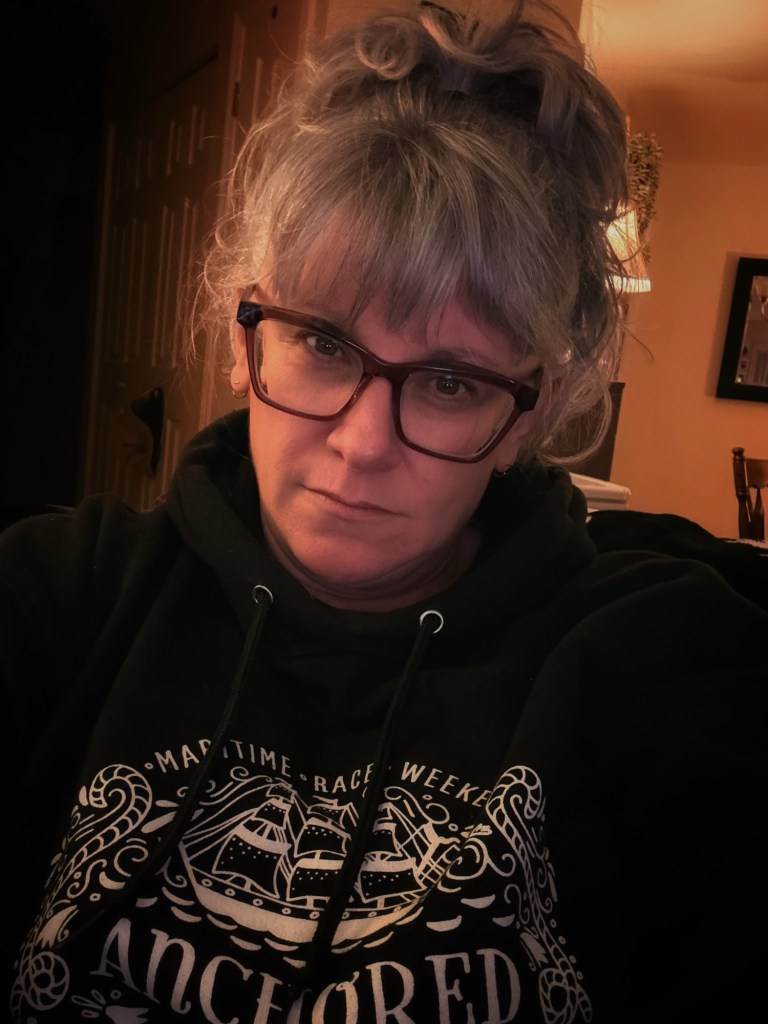
    Would you know this by looking at me? Absolutely not.

    I’m “happy”, “energetic”, “outgoing”.

    I’m good at masking, and I have been since childhood. A “high functioning depression” human.

    Could I unmask? Sure.

    It did happen, not by my own choice, when I had my mental breakdown in 2011.

    My body took over. I hurt, physically. I slowly slipped into a broken mess. My compartmentalism blew back in my face.

    No longer could I say that I was “fine”.

    I have been extremely lucky to have had my family doctor since my early 20s. She delivered my daughter, and was there as I went through my tumultuous separation.

    The day I made the appointment was not an easy one. What was I going to say?

    Turns out I didn’t have to say anything. When she asked me what brought me in, I fell apart. She grabbed a box of Kleenex, pulled her chair up to mine.

    She looked at me and said “You’re done pushing through”.

    I was put off, and seen weekly.

    My daughter was in junior high. I told her the doctor said I needed time off “to rest”.

    I got up every morning and when she left to walk to school, I got back into bed.

    I didn’t want to see anyone. I didn’t want to talk to anyone. I was angry, frustrated, and was short with those who reached out to me.

    You see, depression isn’t necessarily “sadness”. It’s an overload of powerlessness, fear, anger, exasperation, anguish (add your experience here).

    It took me weeks to be able to function. Weeks for the medicine to begin to correct the chemical imbalance.

    The amount of times I heard how “physical activity” would “cure” my depression was unreal, because here’s the thing, I was in the best physical shape of my life when this illness brought me to my knees. I ran my first 10k weeks before my breakdown.

    Mental illness is not just mental. As I have said, it affects you physically. You seize up, you hurt, and it takes time to regain the energy level you had previously been used to.

    With medication and support, I was able to go back to work.

    I have trialed coming off my medication a couple of times, which did not end well.

    For a time, I was on low dose antipsychotics to help with my anxiety (I was chewing the skin around my fingernails).

    I have been on Ativan.

    I am currently on a different antidepressant than the one I was prescribed all those years ago. It has kept me stable.

    What has also helped is the support I have at home, and those of my colleagues.

    I have been transparent about my illness. I know that there are others who cannot be, for reasons that are their own.

    I guess want people to know that there are those of us out there who struggle daily, even though is not outwardly apparent.

    We are overachievers.

    We are people pleasers.

    We find it hard to ask for help.

    If you do catch us unmasked, sit with us. We may not need conversation.

    Sometimes, just knowing that someone is THERE makes a difference.

    I often wonder if I had had someone say “Hey, I’ve noticed that you haven’t been yourself lately. Is there anything I can do to help? Anything you wanted to share?” how I would have responded.

    It’s easy for me to respond “Fine”, “Great”, “Okay” to a general “How are you doing?”

    It is harder for me skirt around a more direct question. And, this may not work for everyone. You may get a “No, all is good”. The thing is that the effort may be noticed. It may shift a mindset.

    I am hope that by sharing a small bit of my experience, that we can all take a moment to “see” people in those vulnerable moments.

    To notice that person sitting alone.

    To notice the misplaced anger.

    To reach out.

    When mental illness shows up at work, at home, people often retreat into silence – both the person struggling and the people around them. Being noticed matters. A small gesture of care, a quiet check in, a moment of presence can make someone feel less invisible.

    Human connection doesn’t solve the struggle, but it often softens the edges.
  • White Knuckling the 9 to 5

    img_0939

    The drive. The hustle.

    The badge of honour we place on how “busy” we are.

    I have worn that badge many times. I have burnt myself OUT multiple times, to my detriment.

    When I was younger I worked “harder”. Not always because I felt like I had to prove something, but because I was a single mother. I had another human depending on me.

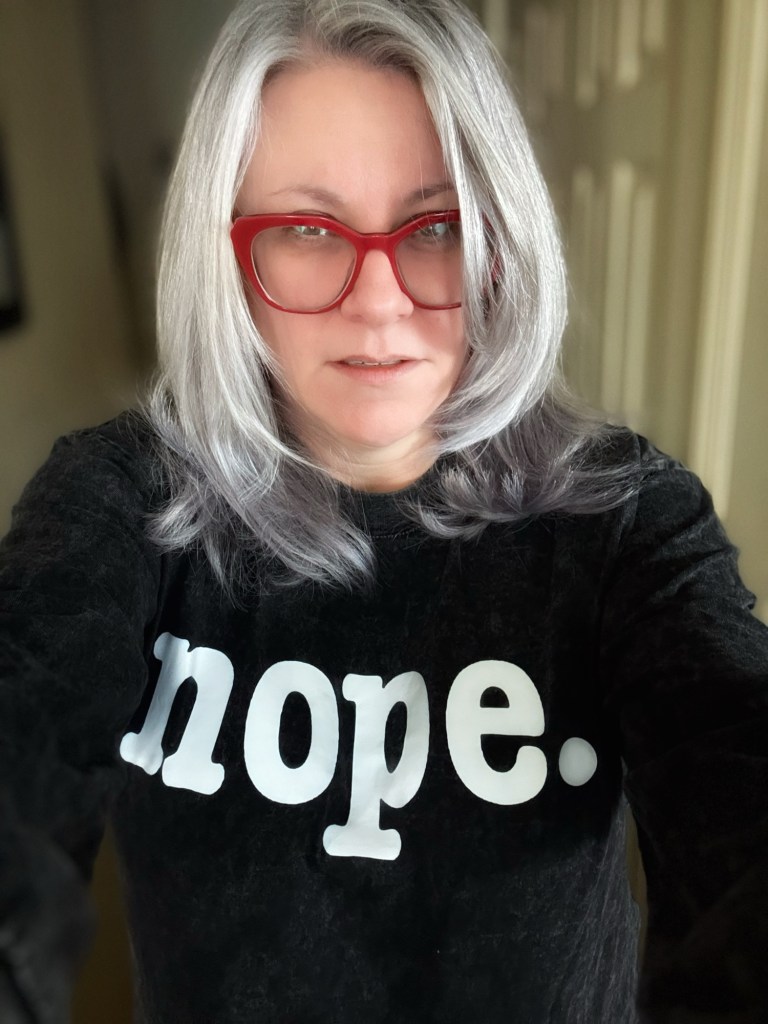
    In a recent therapy session, we discussed the “white knuckling” of the “9-5”.

    I have been working on boundaries for a few years now. I have tendency to ALWAYS go above and beyond, all the while ignoring my own needs.

    Hyper focusing on the task in front of me.

    Demanding perfection and nothing less.

    Boundaries are helping me work smarter. Learning to say no when it matters is making a big difference.

    I can hear some of you now: “What about the client(s)? Do they not deserve our full attention and our best effort?”

    They absolutely do.

    Here’s the thing: If I overcommit myself, I am then attempting to “multitask”. This means I am not able to commit the time I need to each project. This means that I NOT giving the client(s) my best effort. This ensures that mistakes will be made.

    My therapist asked me this simple question when I described my need to overperform: “What if you tried softer? What would that look like for you?”

    That forced me to sit in something uncomfortable.

    My need to please overshadowed all. My worth has been tied up in how I am perceived.

    Trying softer for me means setting AND enforcing my boundaries. Those boundaries have consequences. They need to be reinforced.

    That may not sound “soft”. It IS however necessary.

    Every time I’ve pushed myself past what I can reasonably hold, the fallout has been predictable: rushed work, short patience and a version of myself that I don’t particularly like. There’s nothing noble about it. Nothing heroic.

    I’m learning to stop before I hit that point – not because I am “fragile” or I cannot “handle it”, but because I want to be present, thoughtful, and human in the places that matter.

    This means a win for everyone: my colleagues, clients, and family.

    For me, the days of working “harder” are shifting.

    I am honouring my actual capacity.

    It’s not glamourous, but it’s honest.

    I have “white-knuckled” my way through more workdays than I can count, believing that “grit” was the same thing as purpose.

    It never was, and that era is over.

    Midlife has given me the nerve to loosen my grip and walk toward something that feels like mine – not something I have survive.

  • How Did I Get Here?

    I ask myself this often. Sometimes because I doubt my abilities. Other times because I’m frustrated.

    Imposter Syndrome is a beast.

    Everyone has experienced it.

    I do wonder sometimes – does my depression and anxiety amplify it? I ask that because it is all consuming when it does ramp up.

    The times I do not doubt myself, the times I do forge ahead with a decision, I feel great…for a while.

    Then it starts: do I really know what I am talking about? Who do I think I am?

    Well….

    I’m educated and experienced in both of my fields: Paralegal and Information Technology.

    Why does my brain attempt to tell me otherwise?

    Here’s what I know from experience, and why it matters.

    I know that the majority of the time (for me) it is fear that is showing up. My inner saboteur (what’s up Carl..yes, I named that voice) is trying to protect me from something.

    It could be something as “small” as embarrassment, or something as “big” as failure.

    And if I do fail? I learn something.

    In that moment of failure there is anger, frustration, you may get yelled at, and if it’s extreme enough you may get fired.

    I think it is in the aftermath that we should take time to try and breathe. Ask yourself the question: what have I learned?

    I own my mistakes. That’s important AND step one to moving forward.

    Another big thing: if you do not know the answer or solution in that moment, say so and commit to finding out.

    We all know that not everything goes the way it should.

    Sometimes I go down the rabbit hole of “what is the worse case scenario?”

    Then I live there. Not ideal, because you miss out on the “what if everything goes well?”.

    I have been very lucky to work with some great people, both colleagues and leaders, who have given me their insights, allowed me to lead them, learn, and who have also told me to stop underestimating myself (you know who you are).

    These folks are aware of all of it. They have also experienced the same self doubt, and the overthinking.

    In recent conversations, while mulling ideas over, I was reminded by a few friends that I DO have the knowledge and experience.

    Sometimes, it’s the simplest phrase in a conversation that confirms that you know what you’re doing, you’ve been doing it for years.

    I know how I got here.

    I have worked hard over the 20 plus (you’re not getting the actual time, that would date me, lol) years in these fields, and I do deserve to take up this space.

    You have worked hard.

    You have earned a spot at the table.

    Remember that, even when your brain tells you otherwise.

  • But First…

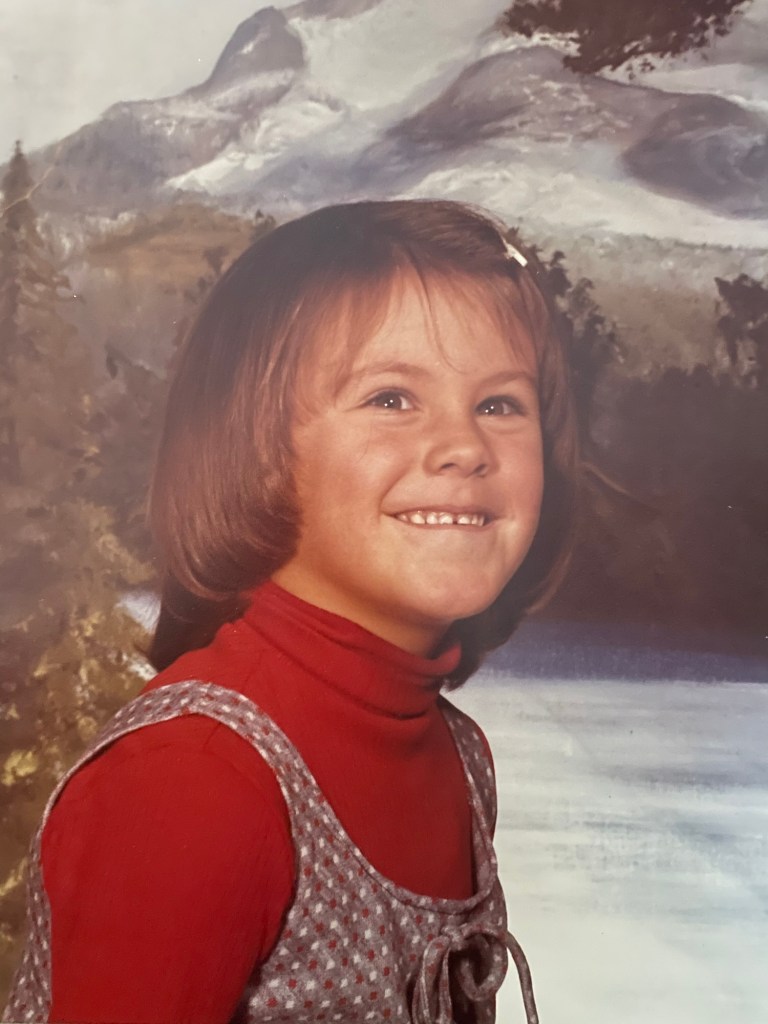
    Look at this little face, so young and eager

    Welcome to my corner of the internet!

    If you’ve landed here, you’re likely a leader, an aspiring leader, or someone who cares about growth—the messy, honest kind. So, I figured the best way to start this blog is by sharing a little bit about where I come from and why leadership (and how we develop it) matters so deeply to me.

    Sitting here now, I am quite confident that I was destined to learn things the hard way.

    I’m the eldest daughter, with one younger brother—no trailblazer ahead of me to show me how to navigate life at my level. I had to carve out that path myself.

    We were military brats, which meant adapting wasn’t a skill we learned; it was a way of living.

    And on top of that, I was a shy child. A people pleaser. Someone who never wanted to disappoint anyone. I paid close attention to everyone else’s needs long before I ever considered my own (do not worry friends—therapy has helped me unpack a lot of that).

    For most of my life, it felt like when presented with two simple choices, I’d somehow pick the more difficult one.

    Did I learn? Absolutely.
    Did it cost me? One hundred percent.

    Motherhood changed everything. It gave me a voice I didn’t know I had. Eight months in, I left a disastrous marriage and began parenting on my own—fully aware that every decision I made carried real weight.

    Around the same time, I was navigating a career path that often felt like “the wheels were coming off of ’er” (if you know, you know). I went back to school with a toddler in daycare to earn another diploma—encouraged by someone who recognized my potential long before I did.

    Fast forward to today: a woman in legal tech, working in a space where I had to prove myself. Supporting people who were, in many ways, earlier versions of me—busy professionals balancing expectations, pressure, and not nearly enough time.

    It wasn’t easy.
    But the more I shared my lived experiences, the more I was accepted.

    I “got it.”

    Still, I kept myself small.

    That inner critic—loud, untrained, unexamined—didn’t serve me well. I felt I had to dig deeper, bring “receipts,” and constantly go the extra mile to prove my worth.

    I know now this story isn’t unique. Many leaders, especially those who grew up as the “responsible one,” the “adapter,” the “people pleaser,” walk a similar path.

    This blog is my way of pulling back the curtain.

    Here, I’ll talk openly about:

    • the real lived experience behind leadership
    • the messy parts of growth
    • the moments where resilience is built quietly
    • and the ways we can lead with compassion—starting with ourselves

    If any part of my story resonates, you’re in the right place.

    I’m glad you’re here.